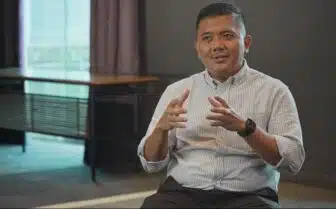
Iraq in a Transitional Era: Synopsis
After two decades at the center of U.S. foreign policy in the Middle East, Iraq has largely faded from Washington’s immediate focus. But as this episode explores, Iraq’s reduced visibility does not mean diminished importance. Instead, the country is entering a quieter—but potentially more consequential—phase shaped by internal political shifts, evolving regional dynamics, and a changing U.S. approach to engagement.
Drawing on perspectives from inside Iraq and Washington, the discussion examines how post-2019 political recalibration, demographic pressures, and a gradual move away from security-driven engagement are redefining Iraq’s trajectory. At the same time, regional developments—from Iran’s internal constraints to Syria’s uncertain stabilization—are reshaping Iraq’s strategic environment in ways that demand more pragmatic, interest-based policymaking.
The episode concludes by assessing where U.S. engagement can still make a meaningful difference. While security concerns remain, the conversation highlights anti-corruption efforts, economic investment, and governance reforms as the areas where U.S. influence may have the greatest long-term impact. As Iraq navigates this transitional moment, the question is not whether it matters—but how its role is being redefined.
Editor’s Note: This podcast was recorded in January 2026, before recent events in Iran and the wider region unfolded. Insights remain critical to understanding Iraq and the current moment in the Middle East.
Guests
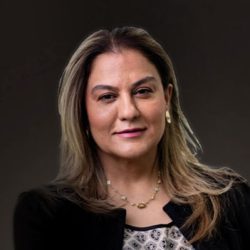
Shahla Al Kli is Counterpart International’s Country Representative for Iraq and the former Chief of Party for the Iraq Civil Society Activity, leading efforts to strengthen citizen engagement, particularly among women and youth. She also serves as a non-resident scholar at the Middle East Institute. A veteran development practitioner, she has held senior roles with Proximity International, Mercy Corps, DAI Global, and advised both the Iraqi and Iraqi Kurdistan Parliaments. She earned her doctorate from The Fletcher School at Tufts University, where her award-winning dissertation examined governance and decentralization in Iraq.
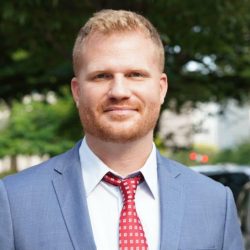
Adam Weinstein is a Deputy Director of the Middle East Program at the Quincy Institute for Responsible Statecraft, where he focuses on U.S. foreign policy in the Middle East, including Iraq, Syria, and Iran. A former U.S. Marine who deployed to Afghanistan, he brings both policy and on-the-ground experience to his analysis of security, militias, and regional geopolitics. His work frequently examines the intersection of U.S. strategy, regional power dynamics, and the long-term implications of American engagement in the Middle East.